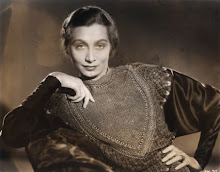
Jimmy Cannon
 was one of our finest writers but is little known today because he wrote mostly about sports. Born in New York City; he died there some sixty years later. He was a newspaper guy. In appearance, anyway, he was along the lines of those we see in the films of the thirties and forties. He looked world weary, yet wise in the ways of city streets and foreign wars.
I did not know Jimmy Cannon, but met a few who did. They told me that he was a loner: a lifelong bachelor who haunted the baseball stadia by day, the fight arenas by night, and the saloons after the fights. He was New York Irish was Jimmy Cannon, with all that entailed. He stopped drinking along the way for reasons unknown to us.
Jimmy Cannon spent his lifetime probing the mysteries behind
Who Struck John? and used that old barroom conundrum as a compass. There was lot of Damon Runyon about him. They were only about a generation apart but Cannon was the better writer. There was a sadder streak throughout his work, and blood in his ink.
Although he focussed on sports, he wrote one of the most moving Christmas pieces I have ever read. The setting is a New York hospital on a Christmas Eve when Jimmy Cannon and a little girl with a cleft palate were brought together. It is a tale O’Henry might have told. And Cannon called it
“Merry Christmas.”Jimmy Cannon came out of the city and lived in the city and died in the city. He loved New York and understood it. He was raised in the old Greenwich Village. His descriptions of the city are urban poetry -- if you were there when guys wore fedoras in the bars all day. If you were there when the only sports that mattered were baseball, boxing and horses. Or if you were there during the August heat waves when there was no air conditioning. Or if you were there when the movie houses were full, the features were double, and the stars no longer in the skies -- but on the screens.
Jimmy Cannon lived sometimes in an apartment and sometimes in a hotel, but always in Manhattan. He cut no grass; he owned no golf clubs. He left his city only to go to war, as did so many of his generation. He was at the liberation of Paris as a reporter for
The Stars and Stripes. He was in Korea in that wicked winter of a place in that wicked winter of a war. He came home from each war and wrote for the New York papers.
Jimmy Cannon wrote with an uncanny understanding of his subjects, a number of whom counted him as a friend. Joe DiMaggio was among them. Ernest Hemingway had a high regard for Cannon’s writing. And Frank Sinatra had Cannon’s stuff sent to him wherever he was. Joan Blondell was seen in his company. Dietrich read him poetry in Paris during the war. Woody Allen did not know him, but was influenced by him. Allen has told us that his image of New York City as a black and white Gershwin town comes from reading Jimmy Cannon.
And those of us who lived in the buildings about which Cannon wrote, and who watched the teams about which he wrote, and who watched the athletes about whom he wrote – those of us also read Jimmy Cannon. We were New Yorkers. He read us; we read him.
I delivered newspapers in the Bronx in the Claremont Park section in the late forties and early fifties. I had about fifteen or twenty apartment houses. Only the last one had an elevator. The paper was the
New York Post, then in the hands of Dorothy Schiff. But most of my customers read it not for politics but because it had subsumed
The Bronx Home News and had good coverage of local events. And it had Jimmy Cannon. And when I reached that last building I would rest young legs made tired by a hundred storeys of stairs and I would sit in a lighted area near the roof -- and under a skylight, I would read Jimmy Cannon.
A sordid postscript:
In recent times, lesser lights have tried to copy Jimmy Cannon’s writing format or emulate his style. But such pretenders rarely acknowledge their source. Now most are journalism majors, from good colleges, who wear expensive suits and play golf, and some of them consort with what now passes for glitterati. At night, they go home to the suburbs or upstate to their million dollar homes. At night, after the fights and the saloons, Cannon was more likely to be found roaming the streets of the city he loved.